NEXT UP (REGISTRATION LINKS BELOW)
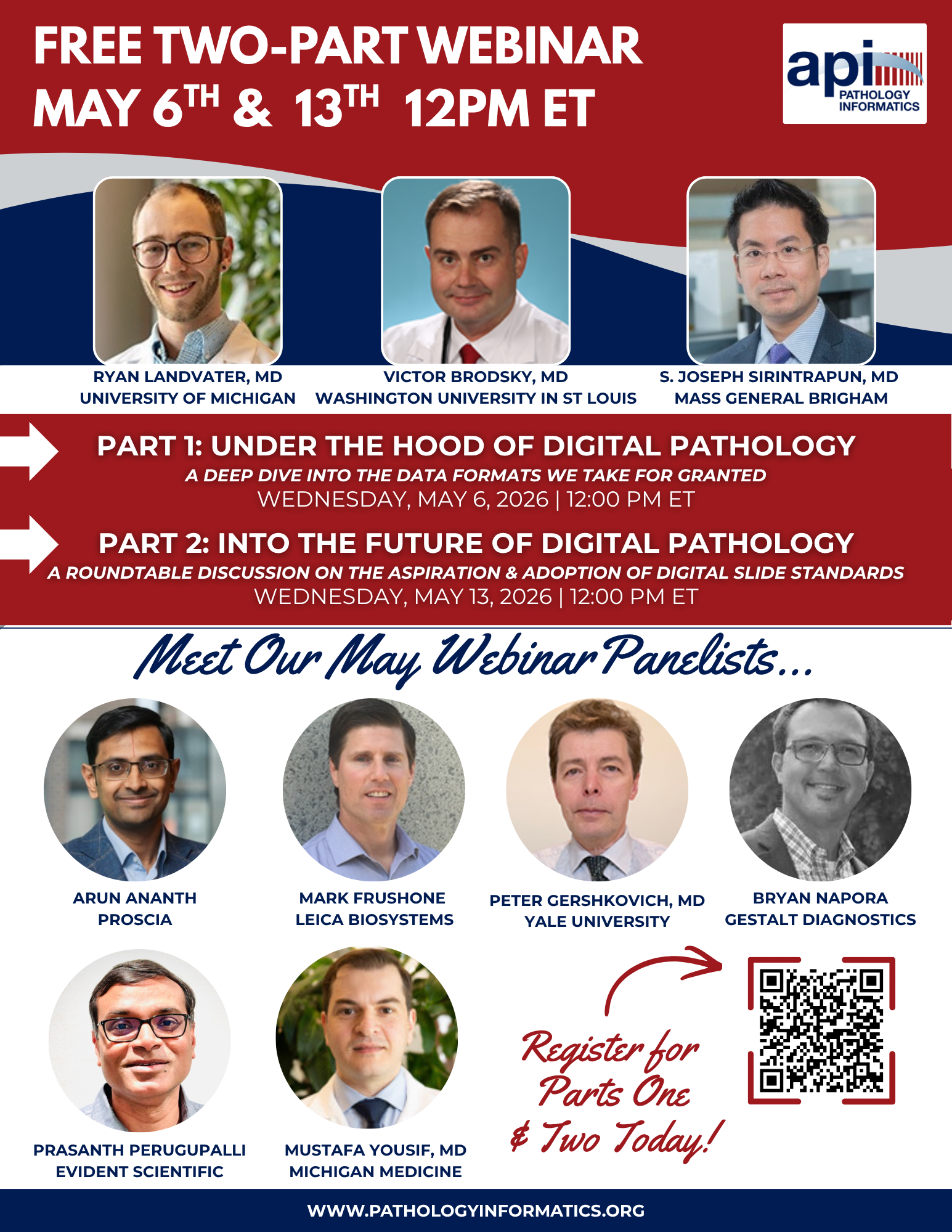
Two-Part API Standards Webinar Series
Wednesday, May 6, 2026
12 PM ET to 1 PM ET
Part 1: Informational Webinar
Title: Under the Hood of Digital Pathology: A Deep Dive into the Data Formats We Take for Granted
Description:
This session will explore the core serialization and communication technologies underlying digital slide formats. Establishing these foundational concepts will help ground future discussions on digital pathology standards. Topics include:
- Implementations vs. specifications and the role of each
- Image compression formats vs. binary container formats
- Image metadata vs. clinical metadata
- Object storage vs. file systems and data access patterns
Wednesday, May 13, 2026
12 PM ET to 1 PM ET
Part 2: Webinar Roundtable
Title: Into the Future of Digital Pathology: A Roundtable Discussion on the Aspiration and Adoption of Digital Slide Standards
Description:
This session will bring together academic and industry perspectives to discuss the future direction of digital pathology standards, including system architectures and interoperability. Topics include:
- Unified container formats vs. modular system design
- Benefits and trade-offs of different architectural approaches
- Key features of an ideal digital slide format
- Interoperability from both specification and implementation perspectives
Host/Emcee:
Moderators:
Panelists:
NEXT UP IN JUNE:

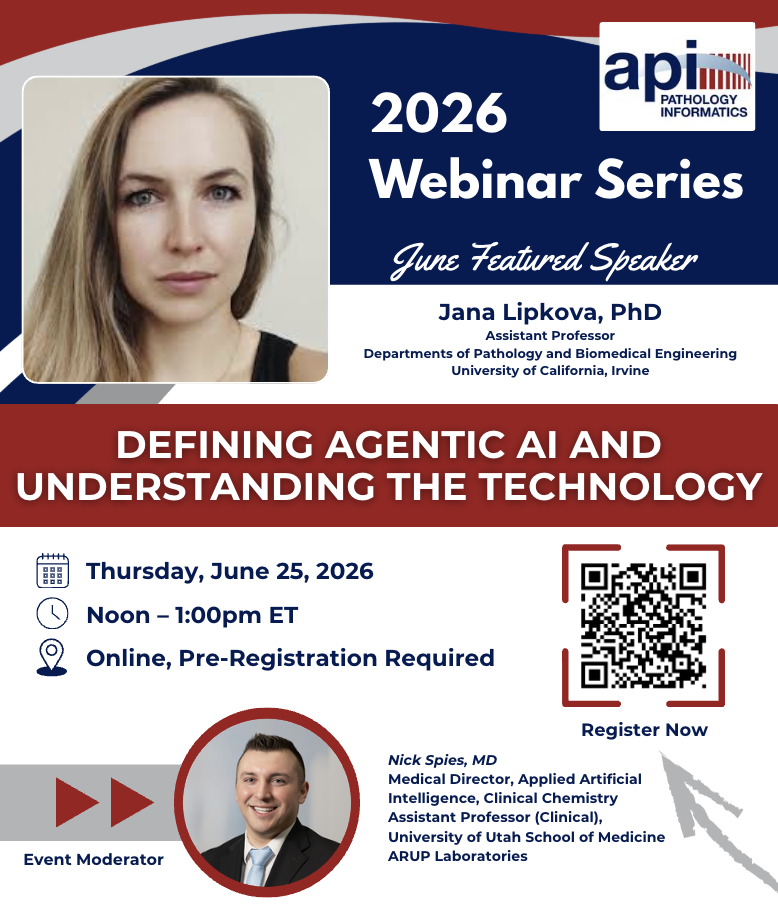
Pre-registration Required:
Interested in sponsoring a webinar?
Email Grace Chae at [email protected]
PAST WEBINARS:
Miss the last one? If you registered, you should have a link to the recording via the Zoom Webinar. If you are an API Member, VIDEO ACCESS HERE!
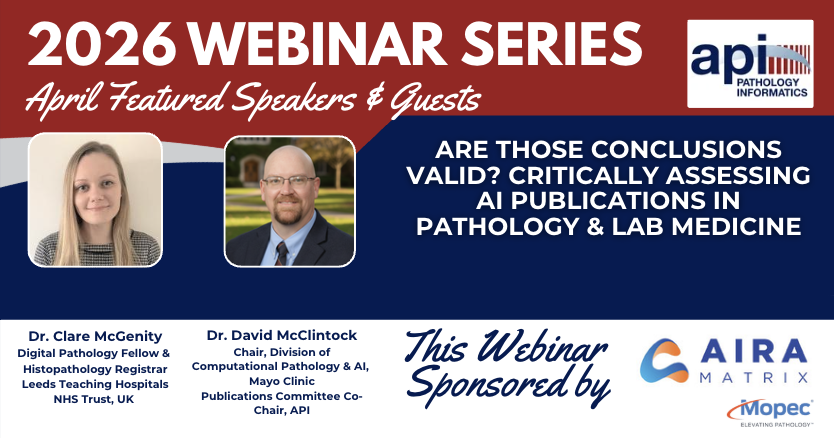
This webinar focuses on the methodologies, tools, and metrics pathologists and laboratorians can use to assess the quality and conclusions made in AI-based papers. The two talks today will walk us through the kinds of AI papers seen in pathology and laboratory medicine, common pitfalls seen in these papers, and ultimately provide specific examples demonstrating well designed manuscripts and the frameworks one can use in your own publications.
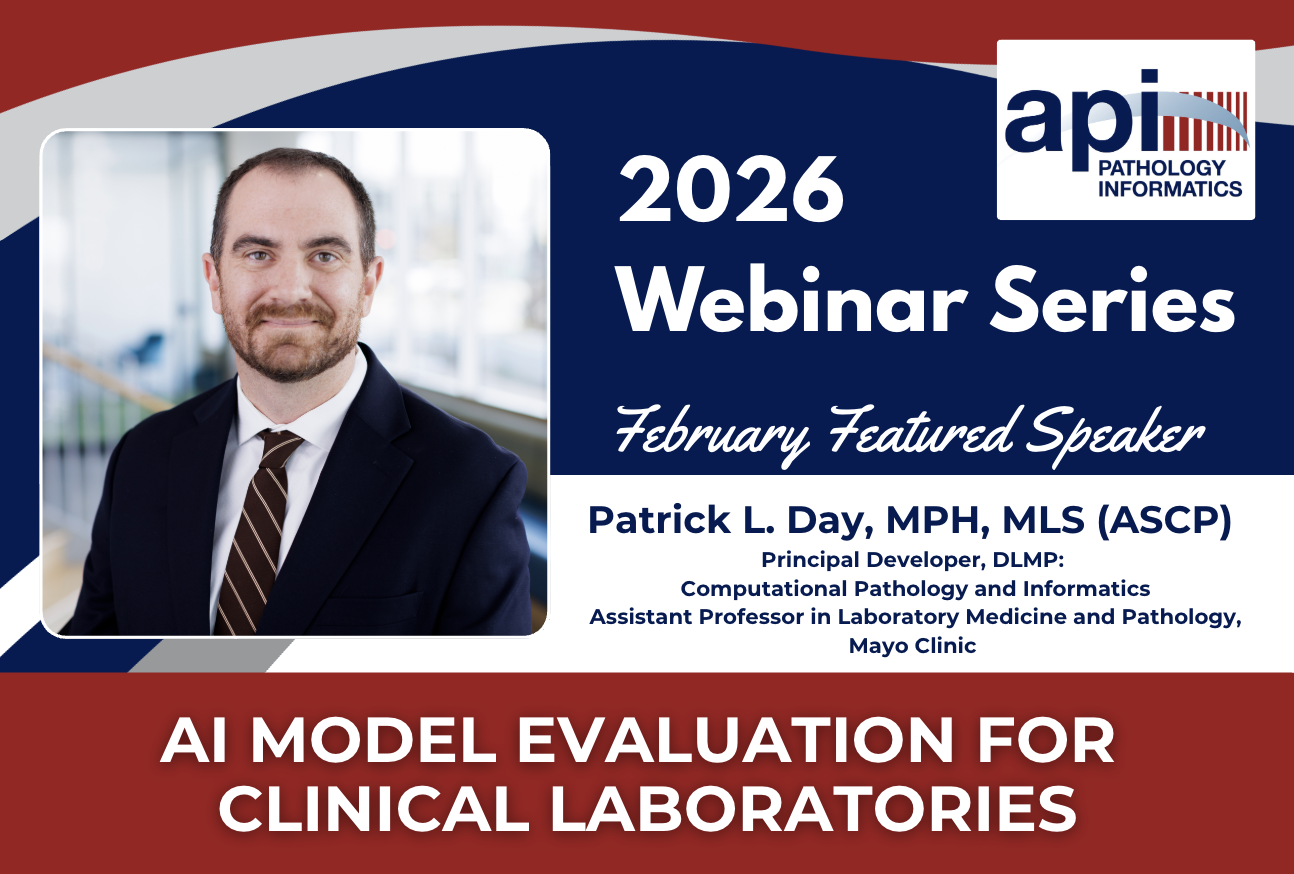
The webinar focused on AI model evaluation for clinical laboratories, presented by Patrick Day from Mayo Clinic. He discussed the challenges of implementing AI in clinical lab practices, emphasizing the need for comprehensive lifecycle-based model evaluation to ensure patient safety. Patrick introduced the Clinical AI Readiness Evaluator Framework (CARE), which addresses technology readiness levels, data provenance, ethical considerations, and clinical usability. He shared a real-world example of an AI model used to predict kidney stone composition, highlighting the importance of data documentation, validation, and post-implementation monitoring. The presentation also covered governance, resource allocation, and the challenges of integrating AI into existing lab workflows. Attendees asked questions about data sharing, billing for AI components, and the responsibilities of AI-generated results, which Patrick addressed.
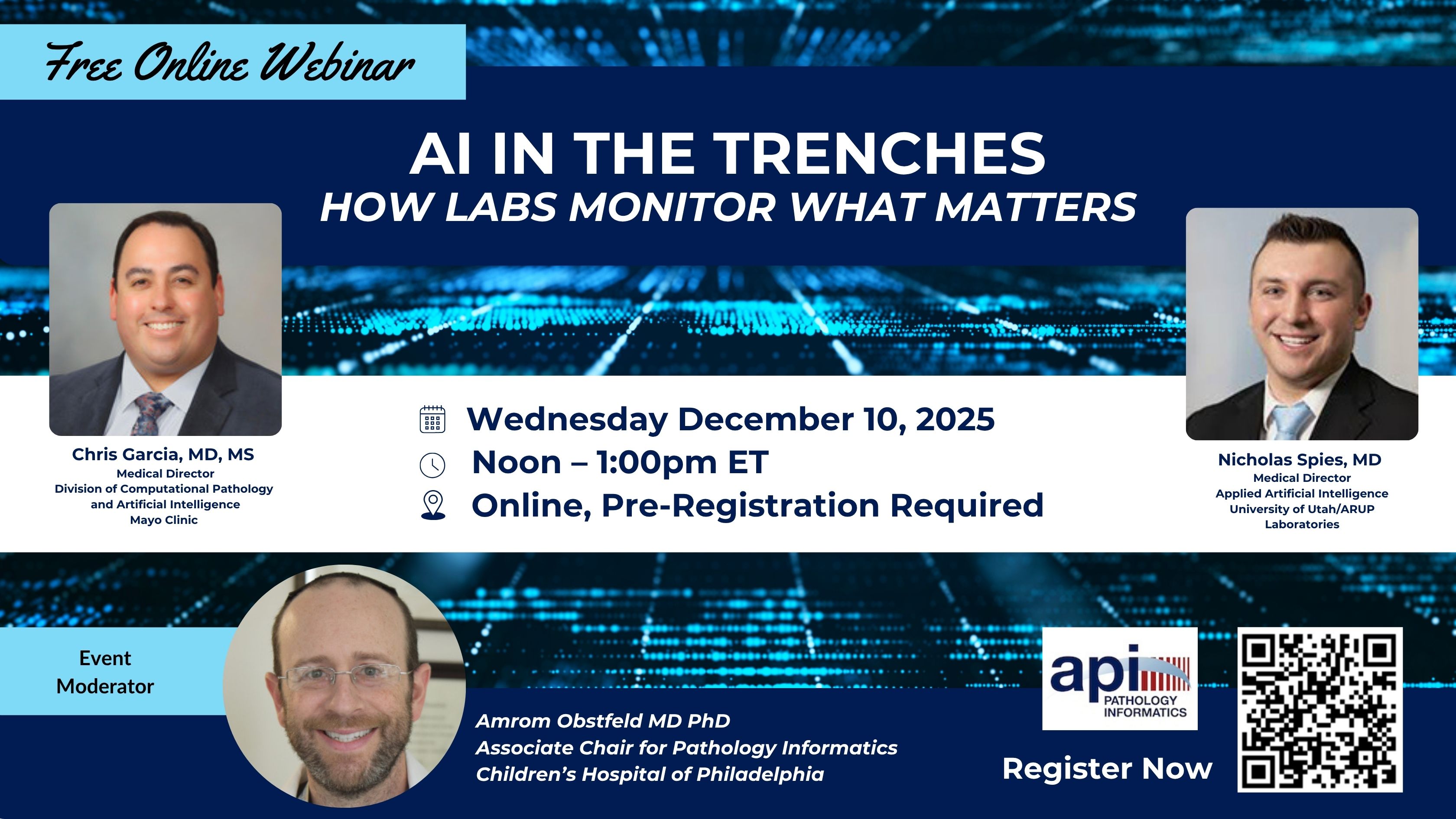
As artificial intelligence becomes increasingly embedded in laboratory workflows, the challenge shifts from deployment to oversight. This session brings together real-world insights from institutions actively using AI-enabled analyses to explore how labs monitor performance, detect data drift, and manage out-of-distribution inputs. Speakers will share how QA/QC plans have evolved to accommodate AI, and discuss practical strategies for ensuring reliability, safety, and clinical relevance. Designed as a candid conversation between groups that have experience with running AI-enabled analyses in the lab, this session offers vendors and potential adopters a grounded view of what it takes to make AI work in practice—and what matters most when it does.
|