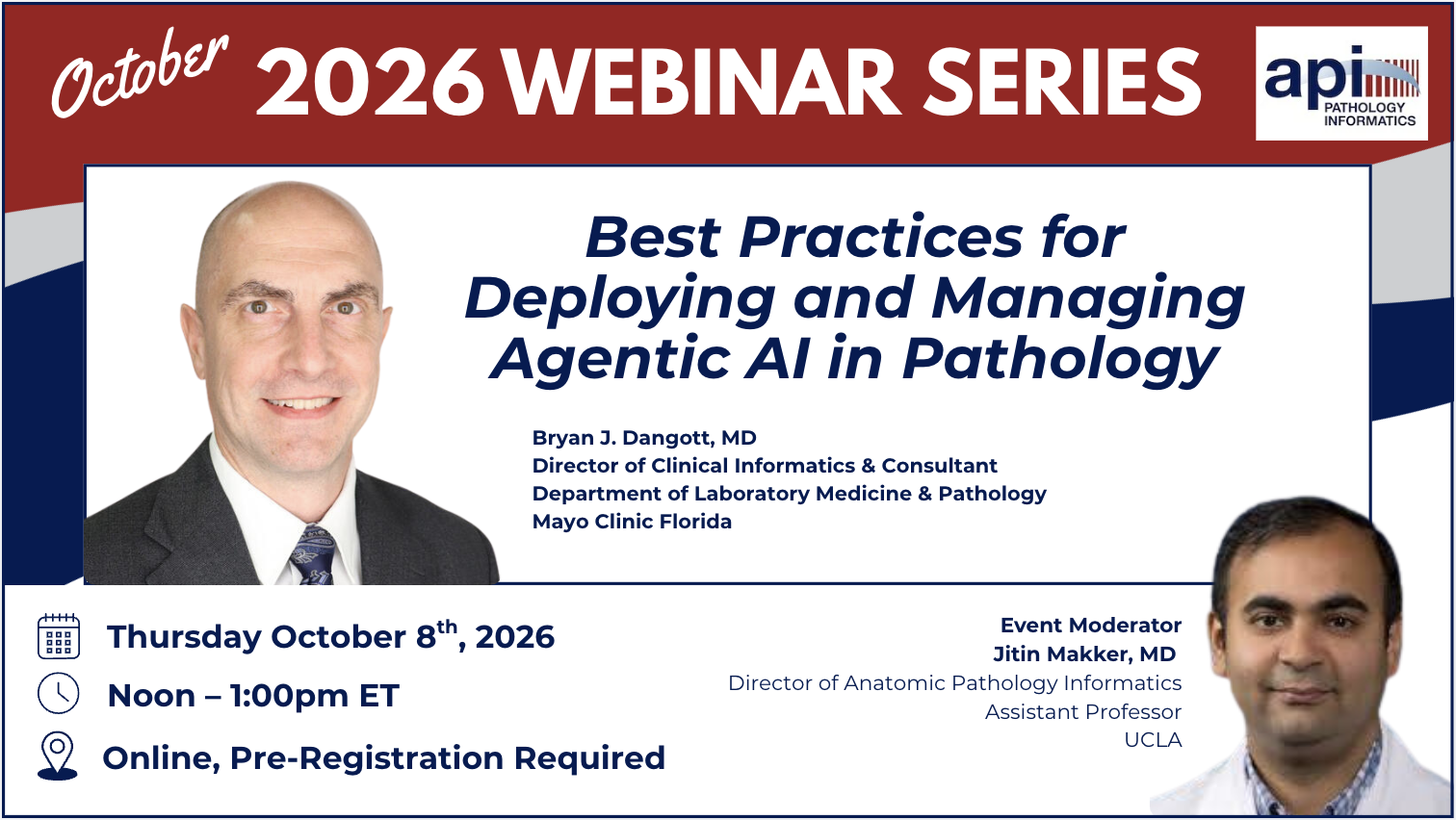
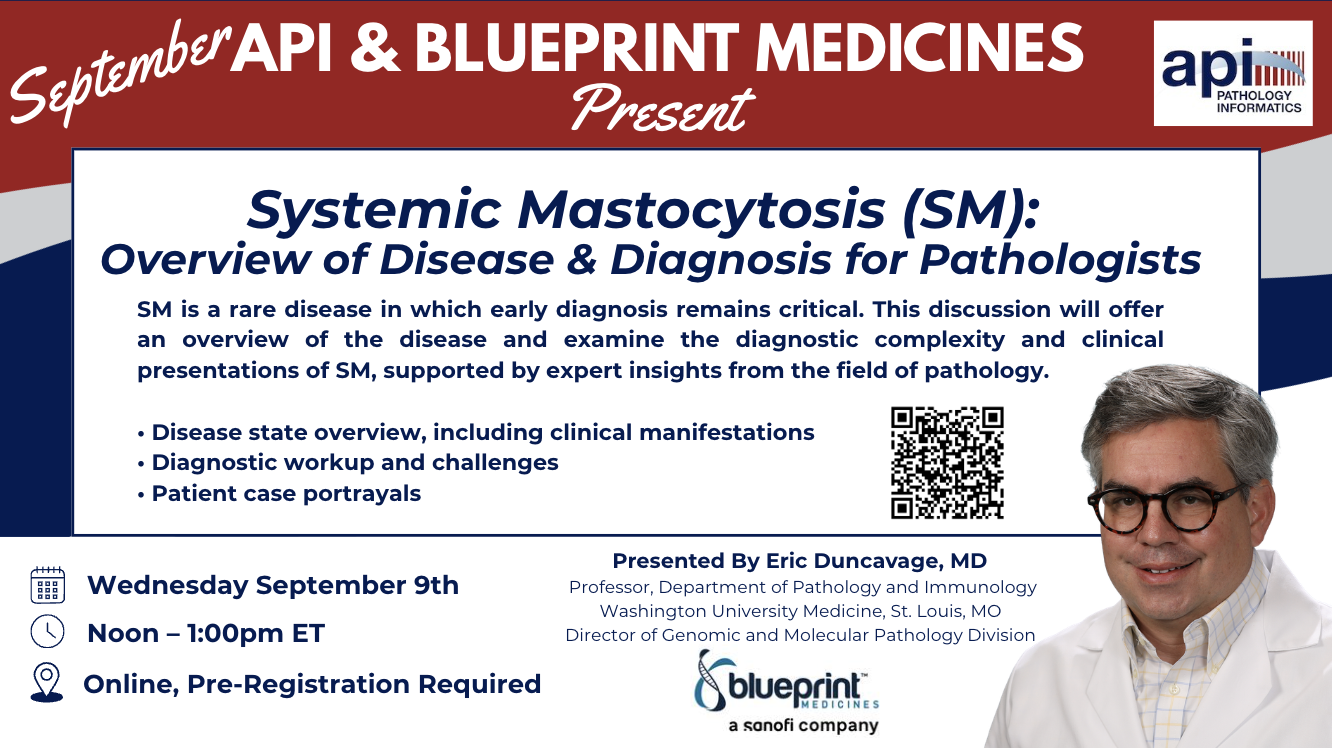
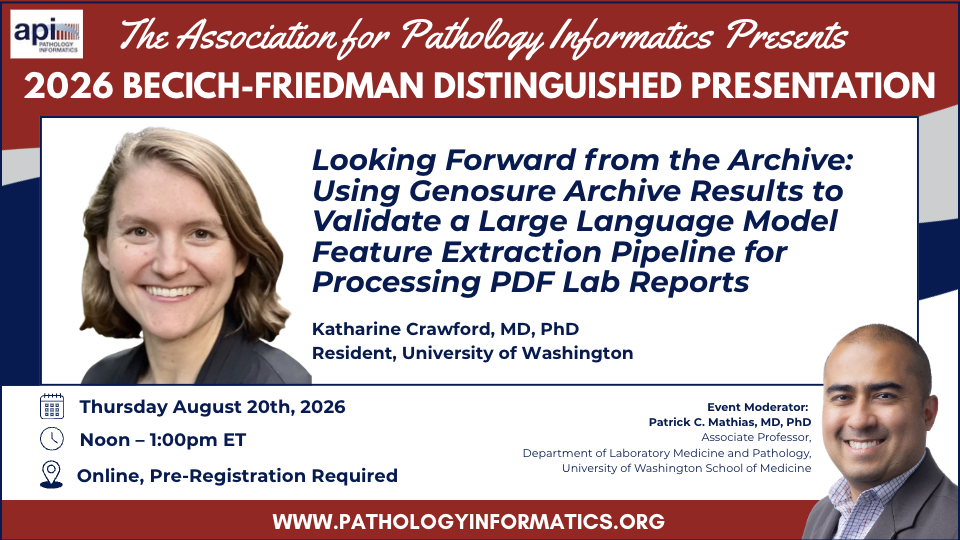
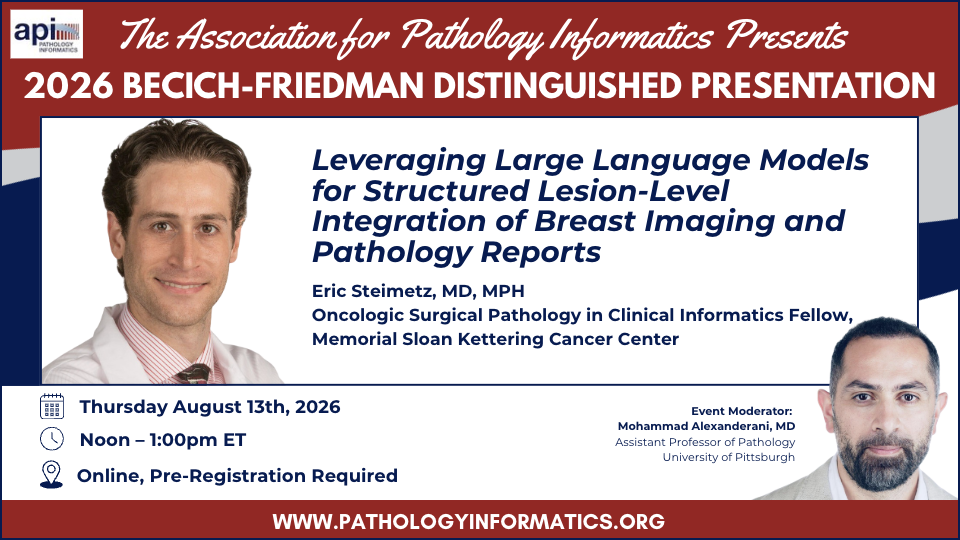
Join us for the api 2026 webinar series
Webinars require Pre-registration. Please click on the event to reserve your spot
NOVEMBER 2026 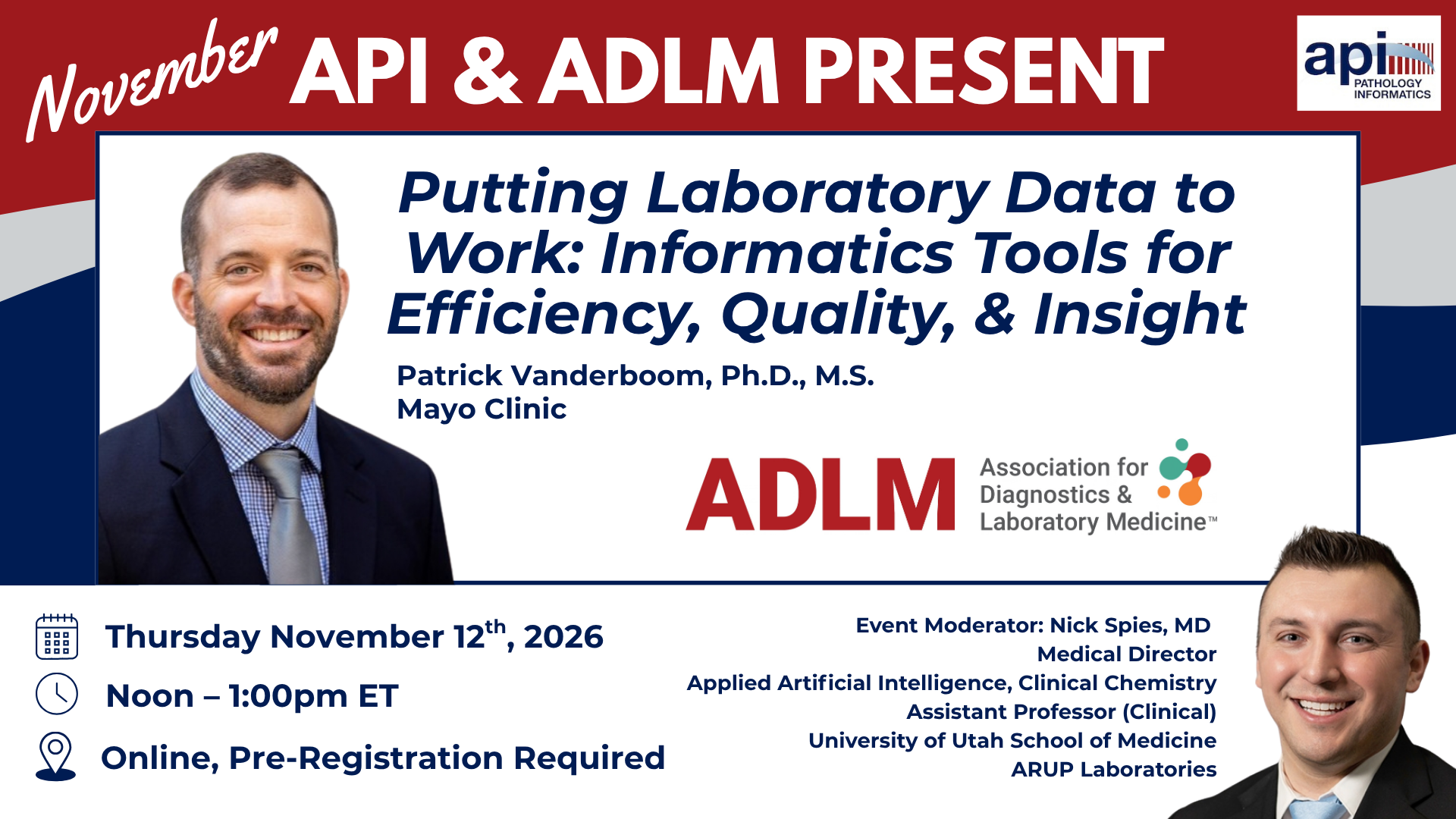
Educational Need / Practice Gap
Clinical laboratories generate enormous volumes of data including patient results, pending lists, QC records, and digital images, yet most of this data is used transactionally and rarely leveraged for automation, analytics, or quality improvement. Despite this abundance of data, the tools built from it rarely reach the people who could use them most. Commercial AI/ML products are often designed for laboratory directors, management, or data scientists, while technologists, who interact with the data every day, are left with static reports and manual workflows. Compounding this, most practicing laboratory professionals received little formal informatics training, making it difficult to bridge the gap between what the data could do and what it currently does. This session addresses that gap by demonstrating how in-house laboratory data can drive practical applications that improve staff productivity and quality, including automated pending lists, analytics-enhanced QC trend investigations, patient-result trend monitoring (patient-based QC), and various quality improvement projects. Attendees will leave with concrete examples of how their own data can be put to work, and a framework for building tools that serve the individuals at the bench, not just the dashboard.
References:
- Master, S. R., Badrick, T. C., Bietenbeck, A., andHaymond, S. (2023) Machine Learning in Laboratory Medicine: Recommendations of the IFCC Working Group Clin Chem 69, 690-698 10.1093/clinchem/hvad055
- Henricks, W. H., Karcher, D. S., Harrison, J. H., Jr., Sinard, J. H., Riben, M. W., Boyer, P. J. et al. (2017) Pathology Informatics Essentials for Residents: A Flexible Informatics Curriculum Linked to Accreditation Council for Graduate Medical Education Milestones Arch Pathol Lab Med 141, 113-124 10.5858/arpa.2016-0199-OA
- Badrick, T., Bietenbeck, A., Cervinski, M. A., Katayev, A., van Rossum, H. H., andLoh, T. P. (2019) Patient-Based Real-Time Quality Control: Review and Recommendations Clin Chem 65, 962-971 10.1373/clinchem.2019.305482
Learning Objectives
At the end of this session, participants will be able to:
- Describe how routinely collected laboratory data can be transformed into applications that improve technologist productivity and quality, such as an automated pending list.
- Apply patient-result trend monitoring (patient-based QC) to detect analytical shifts and support formal QC trend investigations.
- Identify opportunities within their own laboratory data to build tools that empower frontline staff.
Target Audience
Pathologists and lab directors, lab managers, medical technologists and clinical laboratory scientists with data or QC roles, informatics professionals and data scientists, and pathology/lab medicine residents and fellows.

Interested in sponsoring a webinar?
Email Grace Chae at [email protected]
PAST WEBINARS
Miss the last one? If you registered, you should have a link to the recording via the Zoom Webinar.
|